62% of Americans Are Confident in the Kitchen: How Time, Tech and Tradition Shape Home Cooking in 2025

What motivates people to step into the kitchen — and who’s teaching them how? Instacart surveyed more than 1,000 Americans through SurveyMonkey to uncover today’s top cooking trends, motivations and barriers. The results reveal a complex relationship with time, money and tradition at the heart of modern home meals.
From the rise of social media recipes to the pursuit of savings, here’s what we found out about kitchen confidence and what’s influencing it.
Key takeaways
|
These findings paint a picture of American kitchens as places of confidence and ambition, but also where real life can get in the way. Let’s dig deeper into the stories these numbers reveal.
Saving money is a bigger motivation than nutrition when it comes to home cooking
Millennials: Age 30-44
Gen X: Age 45-60
Baby boomers: Age 60+
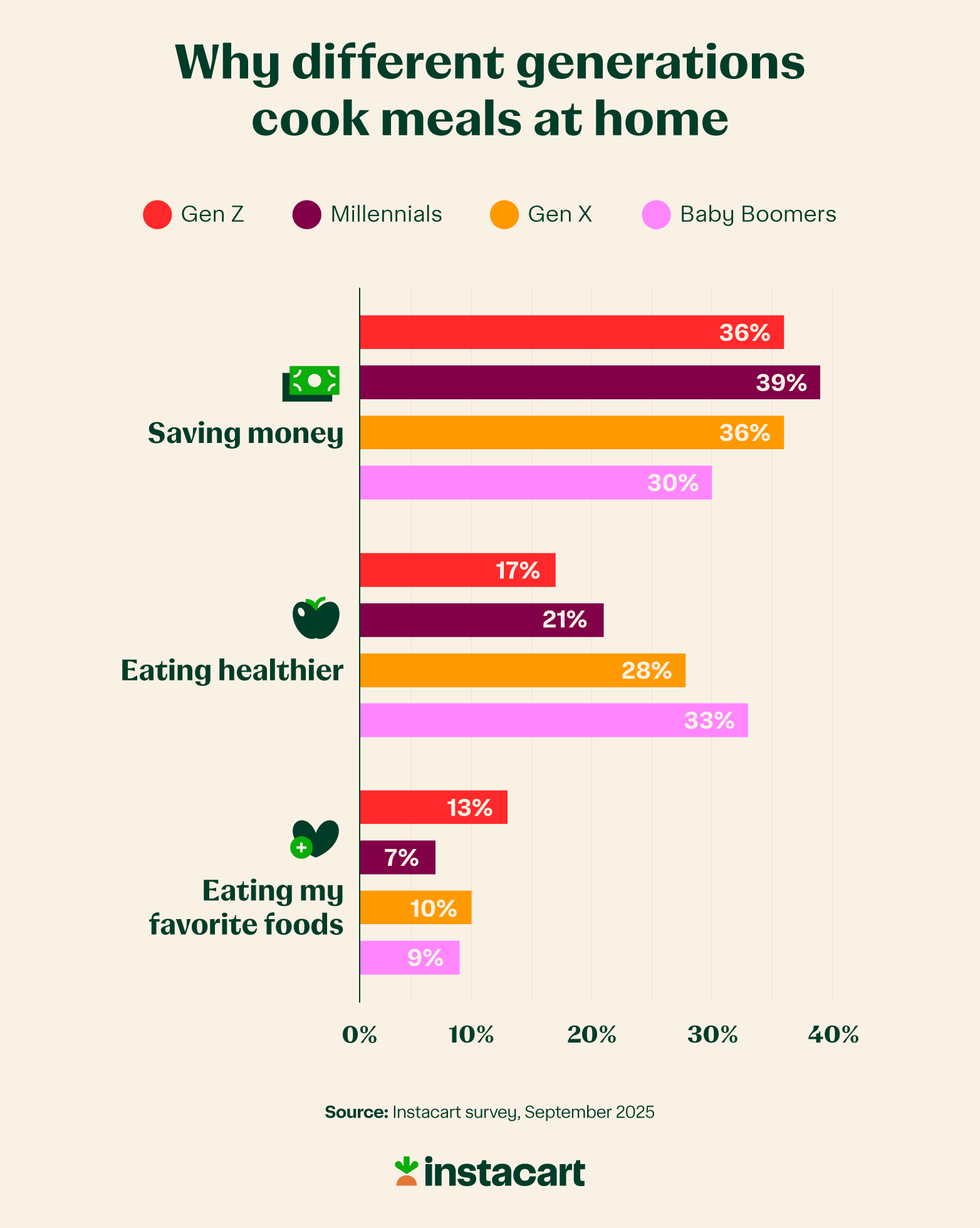
As economic factors continually shift, our motivation to cook at home is also evolving. For many, saving money speaks louder than even nutrition or sustainability.
Rising food costs have turned cooking into a financial strategy: 35% of all respondents say their top reason for makinɡ meals at home is to save money, compared to 26% citing nutrition.
This shift is especially marked among 30-to-44-year-olds (with 39% citing savings), while older adults cook most for health reasons. We saw that health became a higher priority as age increased, while food waste prevention and connecting with others dropped in importance.
For households juggling limited time and rising costs, finding ways to stretch grocery budgets is top of mind. This is especially true among younger and middle-aged adults trying to balance health with satisfaction and savings.
Practical ways to save on groceries
If you’re one of the many Americans who want to save money on groceries, here are a few tips:
- Look for promos and coupons to maximize your savings.
- Make a grocery list and stick to it. Avoid last-minute extras by planning your meals and buying only what you need.
- Choose whole over pre-cut items, since things like whole produce and block cheese are typically more budget-friendly than their pre-prepped options.
- Batch cook and freeze leftovers. Cook double portions of freezable dishes to save time and ensure nothing goes to waste.
The main obstacles to cooking at home are time and energy, not skill
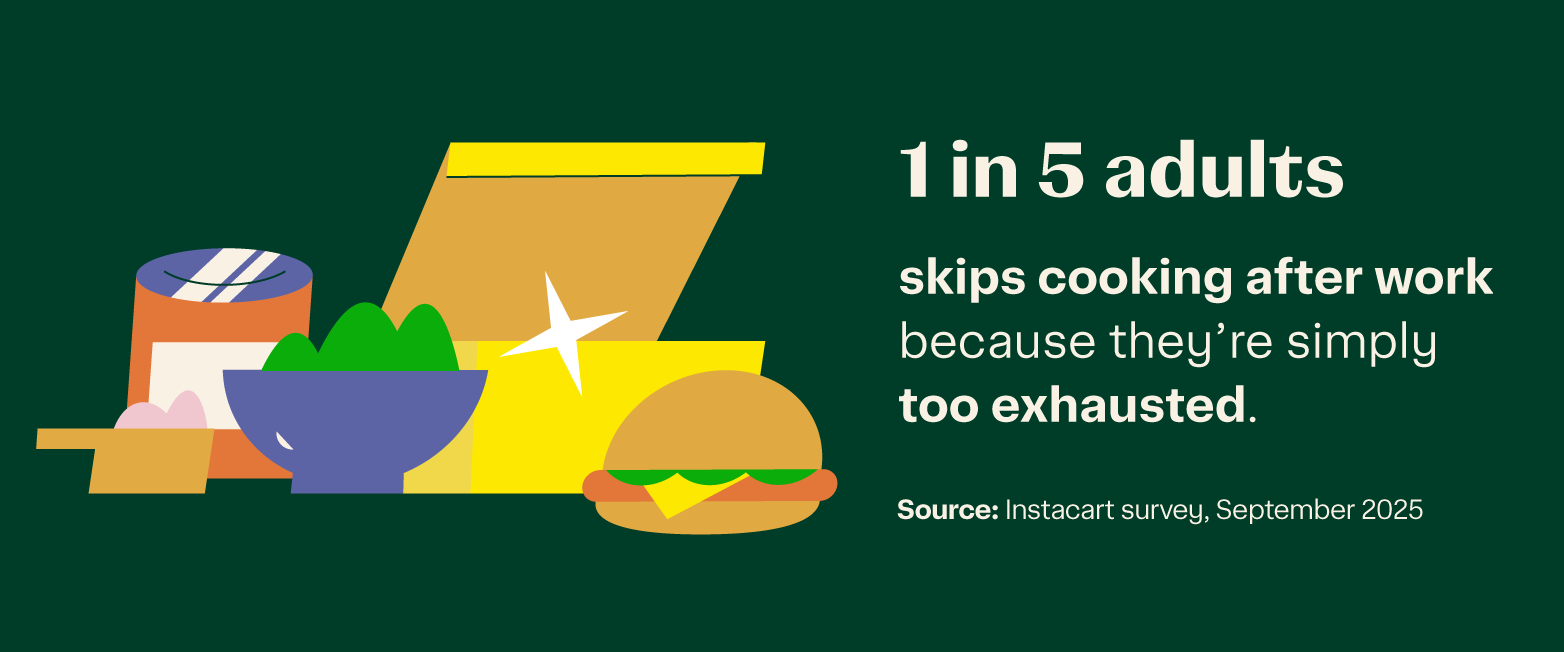
Even the best money-saving intentions often run up against very real barriers of time, energy and household dynamics. In fact, 1 in 5 adults skips cooking after work because they’re simply too exhausted.
Lack of time (20%) and after-work fatigue (19%) are the biggest reasons people say they don’t cook more, outweighing any lack of knowledge or inspiration. This lifestyle challenge affects working-age respondents the most and highlights the demand for fast, low-effort meal solutions.
Those ages 18-29 were most likely to say cooking is “too time-consuming” (25%), with “I'm too tired after work” (21%) coming in second. Ages 30-44 were more tired (22%) than time-crunched (19%), with picky eaters in the household coming in as the third most popular obstacle at 15%.
Older adults age 60 and up may face unique challenges in grocery shopping and meal prep, including limited mobility and access to fresh ingredients. Services like grocery delivery for seniors help make it easier for them to maintain healthy home cooking routines and reduce food waste.
How to make cooking more convenient
Feel like you’re reaching your boiling point? Here are some tips for making home cooking part of your busy routine:
- Consider one-pot meals to simplify cleanup.
- Start meal prepping so you can do the bulk of the work on the weekend and simply heat up your portions throughout the week.
- Keep a roster of “shortcut” recipes (under 30 minutes, few ingredients) that offer home-cooked benefits without the time commitment.
Digital tools transform education for cooking at home, but family still matters most
Gen Z: Age 18-29 at time of survey
Millennials: Age 30-44
Gen X: Age 45-60
Baby boomers: Age 60+
Thanks to technology and community, sources of kitchen inspiration are more accessible than ever.
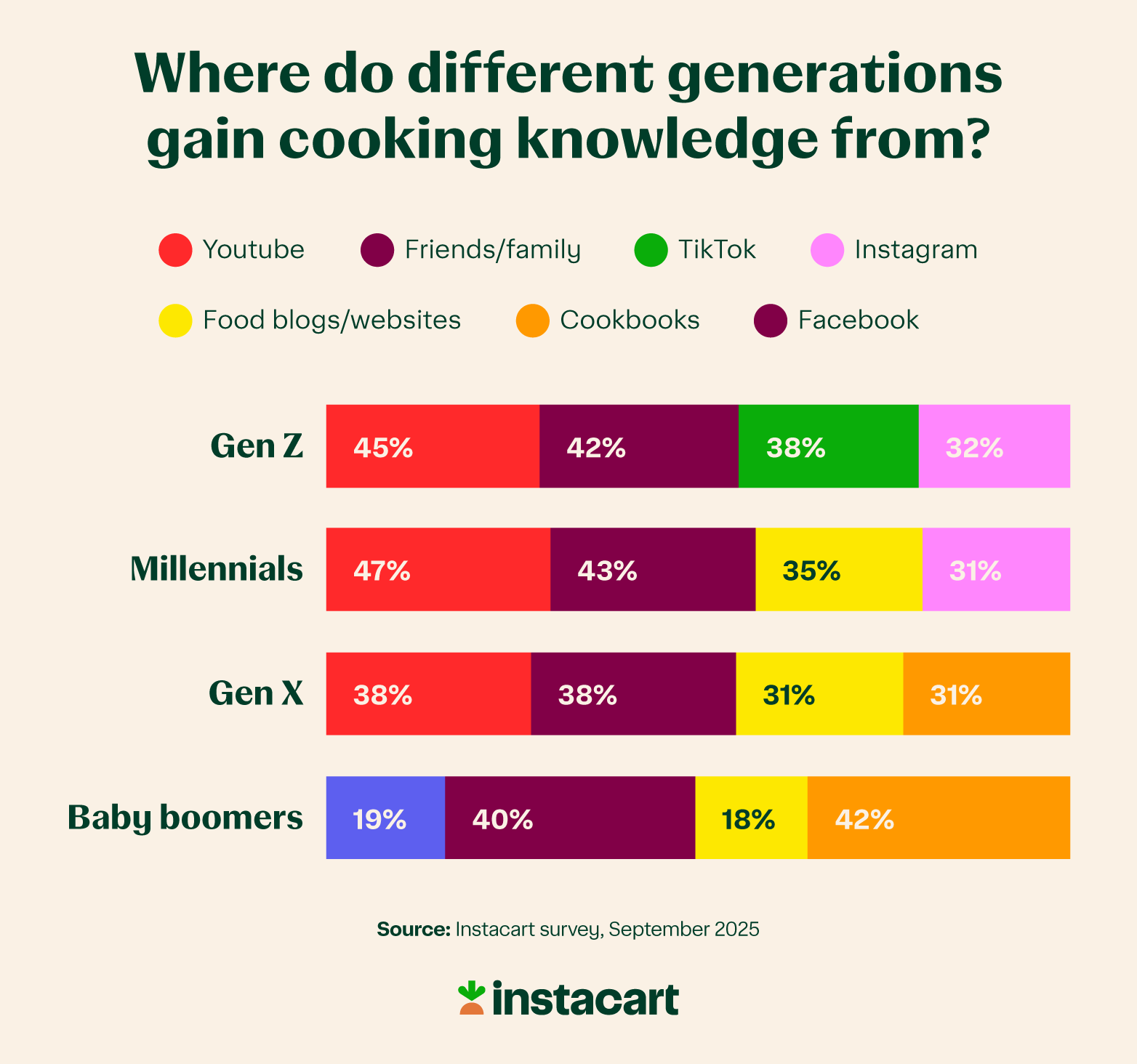
A blend of tech and tradition is guiding the development of skills in the kitchen. Friends and family remain the overall #1 source for cooking inspiration (41%), but YouTube (36%) and other social media channels now rival traditional learning. This is especially true for Gen Z, with nearly 38% of 18-to-29-year-olds turning to TikTok.
Here are some more findings:
- YouTube is the most popular source of culinary inspiration for ages 18-44.
- Americans over 60 primarily turn to classic cookbooks, and when looking online for cooking guidance, they’re more likely to use Facebook over YouTube.
- For Gen X (ages 45-60), family and friends narrowly beat out YouTube by less than 0.5%.
- Gen X is also the group most likely to watch TV cooking shows.
- Women are twice as likely to turn to Pinterest (24% vs. 11% of men), while men are twice as likely to check Reddit for recipes and tips (9% vs. 4% of women).
- Men are twice as likely to learn by taking a cooking class (10% vs. 5% of women).
Bridging generations and keeping traditions alive
Family recipes are special ways to connect across generations, but there are ways to blend cherished traditions with fresh digital trends.
Older generations can bond with younger relatives by exploring TikTok cooking challenges together or curating shared YouTube recipe playlists. Tech-savvy family members can help share and digitize beloved family recipes or old cookbooks. These shared experiences not only make cooking fun but also help pass down essential skills and confidence to the next generation.
To keep traditions thriving, families can set regular “cook together” sessions — either in person or over FaceTime — where grandparents or parents teach signature recipes while also learning trendy techniques from younger cooks. Encouraging a mix of time-honored methods and digital discovery creates a positive environment for growing cooking confidence and culinary curiosity in young adults.
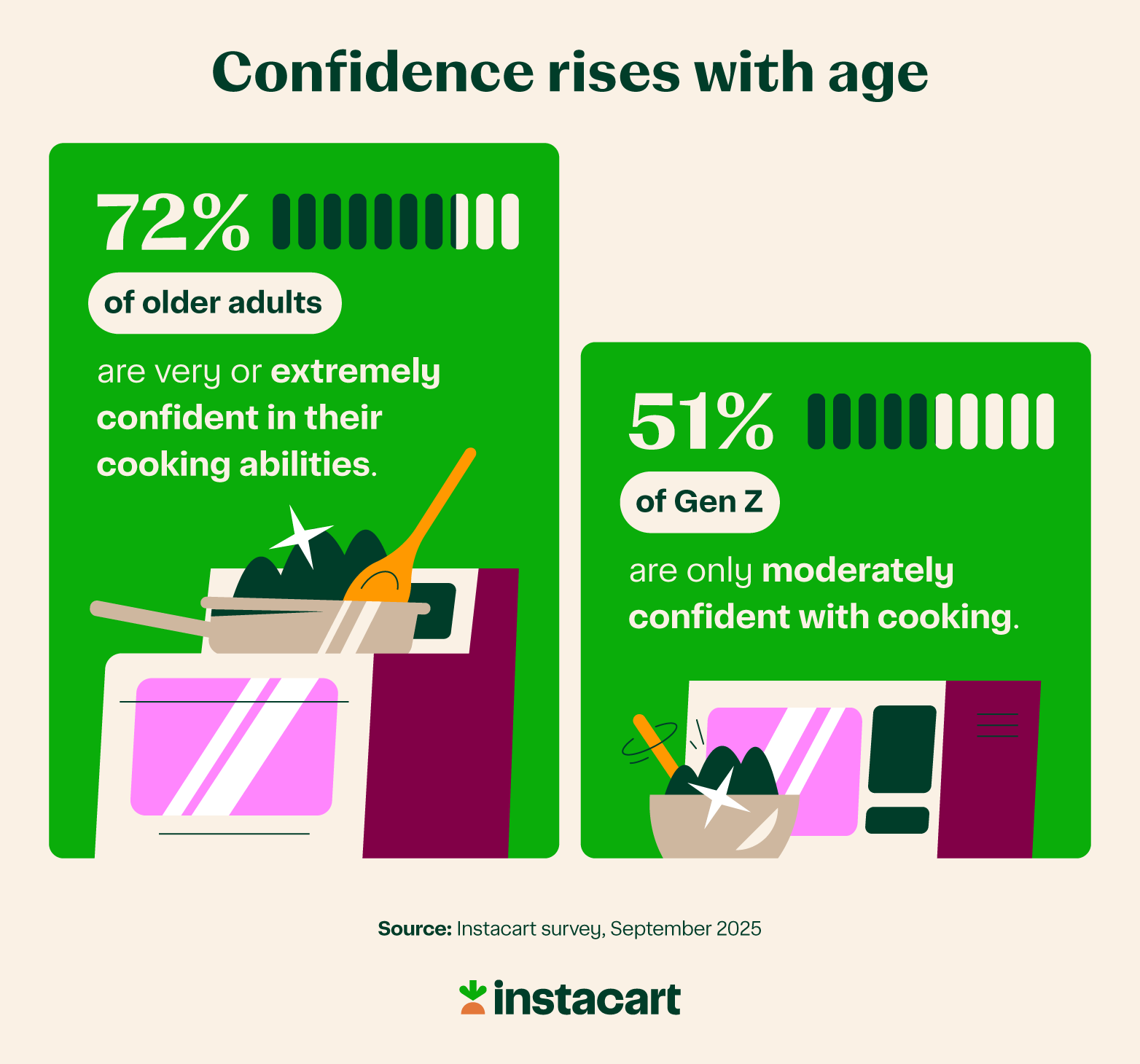
Confidence in home cooking is the norm, not the exception
Over 62% of Americans say they are “very” or “extremely” confident in the kitchen, with only 14% struggling or unsure about their cooking skills. This strong self-belief spans all age groups, but confidence rises with age: Among seniors, over 72% rate their ability as “very” or “extremely” confident. This points to practice and experience being key factors.
Meanwhile, younger Americans are still learning: More than half of Gen Z respondents describe themselves as only “moderately,” “slightly” or “not at all” confident with cooking.
People with children in their household are more likely to rate their confidence as “very confident” or "extremely confident" (65%).
So what can help newer cooks gain the confidence that so many others report?
How to build and sustain kitchen confidence
Modern home cooking isn’t a fringe skill; it’s a shared habit, passed down from generation to generation. If you’re afraid you’re falling behind the pack, here are a few ways to build more confidence in the kitchen:
- Start simple: Master easy go-to recipes (like scrambled eggs or pasta) before tackling more complex dishes.
- Understand your tools: Learn how to use essential kitchen utensils and research what specialized gadgets would help you the most.
- Celebrate small wins: Take photos of what you make, savor the results and reflect on each improvement. Your confidence will grow with every meal.
- Practice regularly: Try cooking just one new dish a week and repeat your favorites to build skills and comfort. Try to recreate the dishes you most frequently order at restaurants.
- Invite friends or family to cook with you: Sharing the cooking experience with others can turn your anxieties into an enjoyable, social activity.
- Learn visually: Watch cooking videos or tutorials to demystify techniques and get inspired.
- Prep in advance: To make the steps less intimidating, organize your ingredients before you start.
Parents still spearhead cooking education
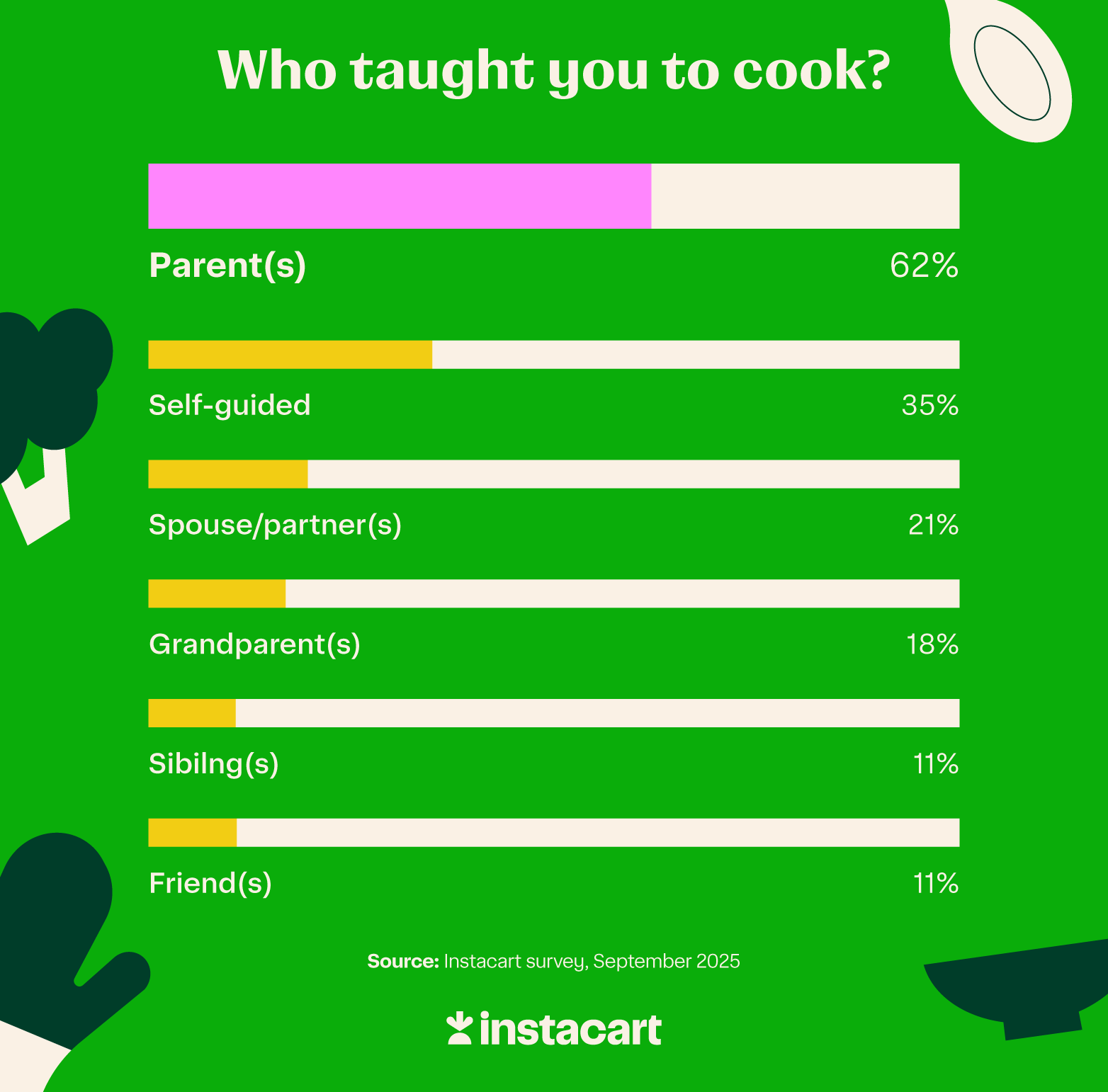
Behind every confident home cook is a unique learning journey — often shaped by family, friends and a growing collection of digital resources.
Across generations, Americans overwhelmingly cite parents as their primary source of cooking education, with 62% saying they learned to cook from Mom or Dad.
The path to kitchen confidence may also be self-made, with over one-third (35%) saying they taught themselves. This highlights the growing influence of accessible online recipes and cooking tutorial videos.
Considerable portions of respondents also report learning cooking skills from spouses/partners (21%) and grandparents (18%), reflecting how cooking knowledge can come from a variety of sources. Notably, learning from a spouse or partner is especially common among men, with 27% reporting this. This may point toward broader gender patterns in household cooking education.
Meanwhile, people ages 45-60 are the group most likely to be taught by their grandparents (23%), while young adults ages 18-29 are most likely to learn cooking skills from a sibling (20%), showing how the kitchen may function as a shared, social space early in life.
Those ages 30-44 are the group most likely to be self-taught (40%), but they're also the group most likely to learn cooking skills from a spouse or partner (28%).
This multi-channel learning environment means new home cooks are mixing hand-me-down recipes with viral online trends as each generation brings new flavors to the American kitchen.
Bringing confidence and convenience together in 2026
The American home kitchen is at a crossroads of tradition and innovation, shaped by digital learning, economic pressure and a desire for health and connection. For more insights on how Americans really cook, check out our roundup of cooking statistics and family dinner statistics.
Instacart is proud to empower home cooks of all skill levels. With curated recipes, grocery budgeting tools and convenience-driven solutions, Instacart removes barriers and saves time, helping consumers translate intention into action. Order your next grocery stock-up through Instacart and see the difference in how much time you can save.
Methodology
The survey of 1,011 U.S. adults 18+ was conducted via SurveyMonkey Audience for Instacart on September 11, 2025. Data is unweighted and the margin of error is approximately +/-3% for the overall sample with a 95% confidence level.

Mel Hull
Author
Mel is a seasoned content strategist and food writer with over a decade of experience helping brands tell compelling stories. Inspired by her hometown of Houston, TX, she brings her love of bold flavors and Southern hospitality to the table. In the kitchen, she loves baking (especially banana bread!) and experimenting with Tex-Mex dishes.

Heather Matley
Editor
Heather Matley is an editor at Instacart whose passion for food and cooking has inspired her work on everything from grocery guides to recipe development. With over eight years of experience in editing, content creation, and search engine optimization, she strives to empower readers with the most effective tools, guides, and ideas to transform their home cooking.

Instacart Recommends
View most recent posts →