Measuring Your Multi-Tactic Ad Strategy on Instacart

As our portfolio of advertising formats continues to grow, comprehensive campaign measurement is critical. It’s no surprise that consumers may interact with multiple ad formats, like display ads or sponsored products, prior to purchasing one of your products. Historically, Instacart used last touch attribution, meaning the last ad a consumer interacted with was credited with all of the sales dollars.
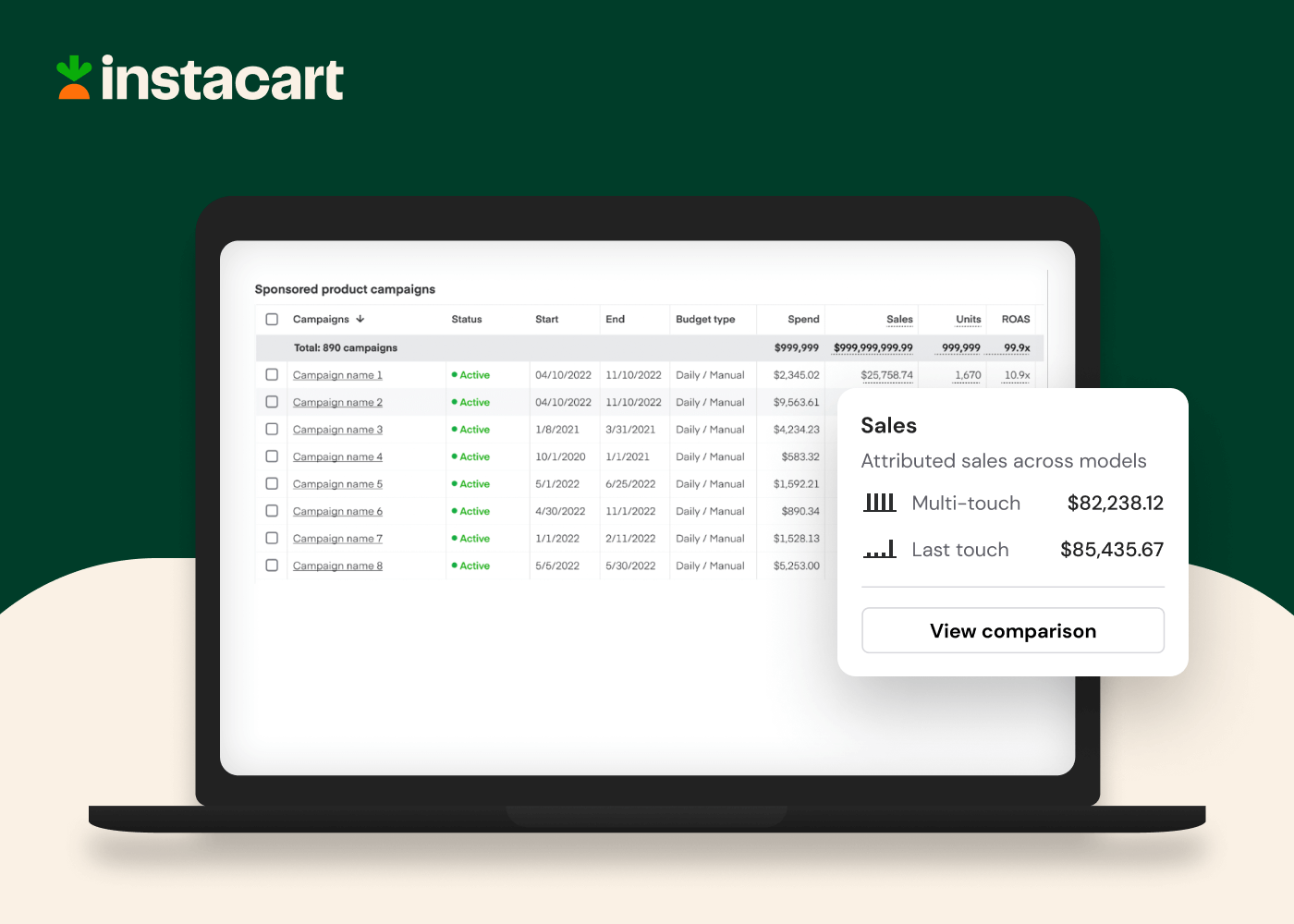
On 8/1, we launched a multi-touch attribution model and an improved last touch attribution model. This article provides a high-level overview of attribution and both the last touch and multi-touch methods, provides some commentary about why we made the change, and outlines what this means for your advertising campaigns.
What is attribution?
In the advertising industry, attribution refers to analyzing which advertising touchpoints a consumer interacted with on their path to purchase and assigning a predetermined amount of sales credit for the purchase accordingly.
It is a way of crediting sales dollars to advertising touchpoints to help gauge the impact of each touchpoint. And there are different methods for doing so because there isn’t a single ‘right’ answer.
What are multi-touch attribution and last touch attribution?
Multi-touch attribution distributes purchase credit across all relevant advertising touchpoints in a consumer’s journey. This is the method we are now using by default. By contrast, last touch attribution assigns all credit for a sale to the last ad a consumer interacts with.
Why did we introduce these changes?
We made multi-touch attribution the default view for sales reporting because it better reflects the contributions of multiple touchpoints throughout a consumer’s journey and to more closely align with industry advertising practices.
While multi-touch attribution is now the default methodology for attribution measurement, we also provide an improved last touch attribution model as an option. The last touch attribution model is available to help you understand the last touchpoint a consumer had before purchase, but we recommend using the default multi-touch attribution option to better reflect the value of each interaction in the path to purchase.
What does all of this mean for you?
If you have an Instacart ad account and are running campaigns today, there are a few changes in Ads Manager. You can see a clear demarcation line in Ads Manager signifying the date that we shifted to this new methodology. You can still view historical sales reporting based on the previous methodology, and the attribution window of 14 days remains unchanged. It is important to note that this launch is a change to sales reporting only.
All self-serve ad formats including sponsored products and targeted display ads across the search and browse experience leverage this new multi-touch attribution methodology. New ad formats that we introduce in the future will also follow this method.
By adopting multi-touch attribution, you can better understand the unique sales impact of each type of campaign you run as part of your multi-tactic advertising strategy.
Log into Ads Manager to review your multi-touch attribution sales data.

Instacart
Author
Instacart is the leading grocery technology company in North America, partnering with more than 1,800 national, regional, and local retail banners to deliver from more than 100,000 stores across more than 15,000 cities in North America. To read more Instacart posts, you can browse the company blog or search by keyword using the search bar at the top of the page.