Turkey Cooking Time Calculator: Thawing, Stuffing & Roasting Explained

Turkey…check. Stuffing…check. Roasting pan…check. It’s time to make the tastiest feast for your loved ones to enjoy. But, wait! How long does it take to cook a turkey? How do you thaw your meat? Thankfully, we have an easy-to-use turkey cooking time calculator to help you.
To use our unstuffed or stuffed turkey cooking time calculator, all you have to do is fill out the size of your turkey, its filling (if it has any) and the desired level of doneness. You will then find out the estimated cooking time in hours.
How do you calculate turkey cooking time?
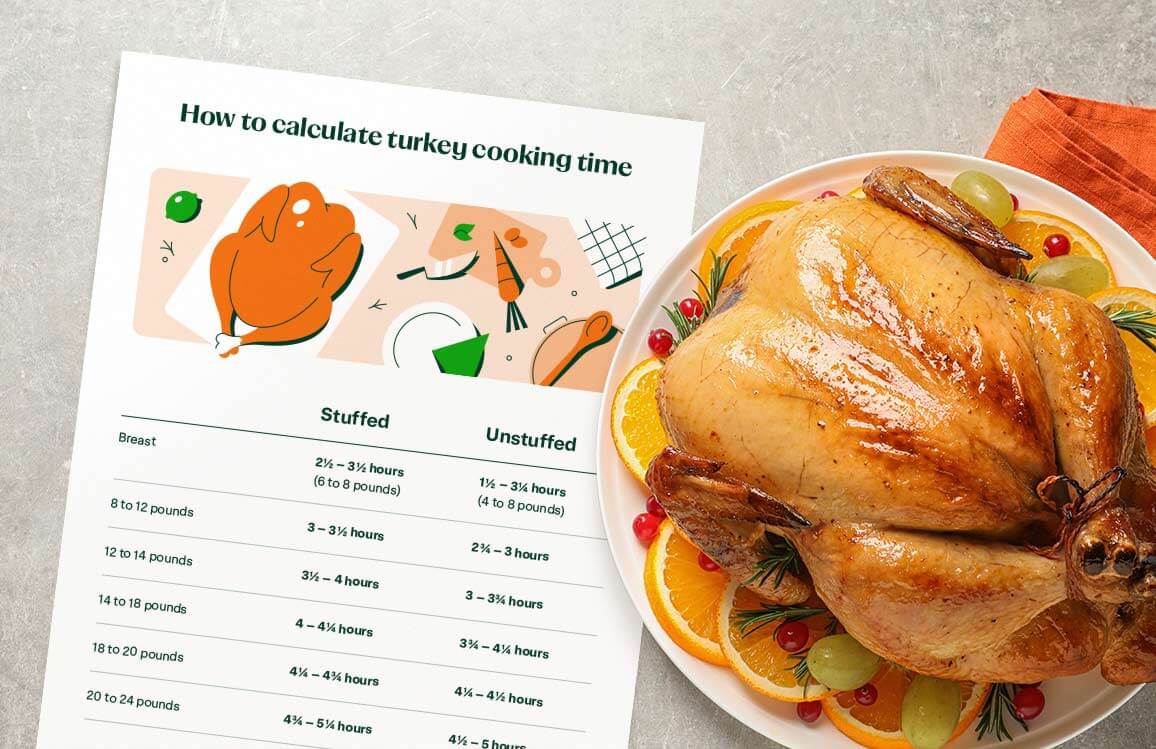
Turkey cooking time is calculated based on weight, stuffing and desired level of doneness. Each pound of turkey is calculated into the average cooking time to ensure the meat is fully cooked.
Test out our turkey cooking time calculator or reference the chart provided by the USDA below for further directions. Please note that all cooking times are based on a 325°F oven. You can also reference our turkey cooking time chart for more information.

What internal temperature should a cooked turkey be?
The USDA recommends that a fully cooked turkey reach an internal temperature of at least 165°F to ensure safety. It’s important to check three key areas:
The innermost part of the thigh
The innermost part of the wing
The thickest part of the breast
For stuffed turkeys, the center of the stuffing must also reach 165°F. If the turkey meat hits 165°F first, you must continue cooking until the stuffing is also safe. Use an instant-read digital thermometer, which provides accurate, quick readings, unlike pop-up timers, which can be unreliable and may give false readings.
How many minutes do you cook per pound of a turkey?
According to the recommended cooking times from the USDA, you should cook an unstuffed turkey for roughly 20 minutes per pound. Stuffed turkeys require roughly two additional minutes per pound.
Please note the exact cooking time will vary depending on the cooking method, exact weight and preferred doneness. Refer to our turkey roasting time chart to guide your cooking process accurately.
Alternative turkey cooking methods
While roasting in the oven is the most common way to cook a turkey, there are several alternative methods that can deliver delicious results and save time, including:
Deep frying: Takes about 3 to 4 minutes per pound. This method produces crispy skin and tender meat but requires caution. Always use a large outdoor fryer, monitor the oil level and ensure the bird is completely dry before frying to prevent dangerous splatters or fires.
Smoking: Cooks at lower temperatures (225°F to 275°F) for a longer period (about 30 to 40 minutes per pound). Focus on reaching the target internal temperature of 165°F for juicy, flavorful meat with a smoky aroma.
Spatchcocked/butterflied: This technique involves removing the backbone and flattening the bird, reducing cooking time by up to 40%. It results in evenly cooked meat and crispier skin, making it a popular choice for quick, flavorful turkey.
Turkey troubleshooting: Common cooking issues
Preparing the perfect turkey takes time, skill and patience (of course). Here are some common problems you might encounter, along with simple solutions to help you achieve a moist, evenly cooked bird.
Problem | Solution |
The turkey is cooking unevenly (breast is dry, thigh is not done) | Tent the breast with foil halfway through cooking to slow its temperature. |
Skin isn't getting crispy | Rub the skin with butter or oil before roasting; increase oven temp to 400°F in the last 30 minutes if the internal temp is close to 165°F. |
The turkey won't fit in the oven | Break it into pieces (legs, wings, breast) and cook separately for faster, controlled results. |
There is too much turkey | Buy the right size, about one pound per person for a whole bird or half a pound for a boneless breast to avoid waste and leftovers. |
Turkey hasn't thawed | Plan your thawing process based on your method (refrigerator or cold water) and start early to ensure it's fully thawed before cooking. |
Turkey is flavorless | Dry brine with salt or create a herb butter rub to enhance flavor without overcomplicating the process. |
Stuffing is overcooked | Cook stuffing separately to prevent overcooking your turkey and ensure both are perfectly done. |
Turkey is boring | Add aromatics like garlic, rosemary, thyme or citrus to boost flavor and make your turkey more interesting. |
How long to thaw a turkey by size
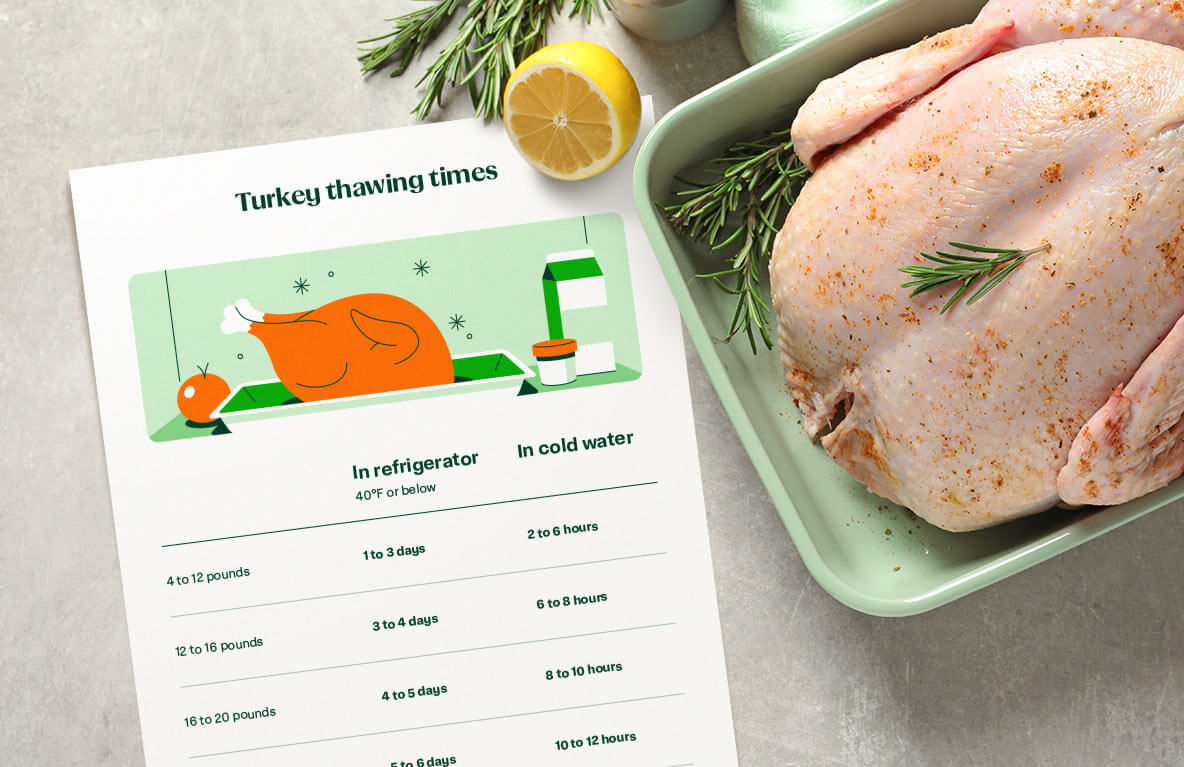
Defrosting or thawing a turkey will vary depending on size and method. You can defrost a turkey in a refrigerator or thaw a turkey in cold water. It is not recommended to use a microwave for thawing a turkey due to size and safety hazards.
Let’s review some of the turkey defrosting methods below.
Refrigerator thawing
If you have some time to spare before your feast, then you might want to try out the refrigerator thawing method for your turkey. According to the turkey thawing chart, for every 4 to 5 pounds of meat, you must add an additional 24 hours to the time.
When you thaw your turkey in the refrigerator, make sure to keep it in its original packaging. Add the wrapped turkey to a tray or pan to contain all juices that could potentially spill.
Cold water thawing
Folks who are looking for a fast way to thaw their turkey as they enjoy a hearty Thanksgiving breakfast can choose the cold water method. Start by making sure your turkey is wrapped thoroughly to ensure no water can leak in.
Submerge your turkey in a bucket of cold water. Make sure to change the water every 30 minutes so it remains cold. Every pound of turkey requires 30 minutes of thawing in cold water.
Cook your turkey immediately after the cold water thawing method.
How to safely refreeze a turkey
Cooked and uncooked turkey can be refrozen if you do so under certain thawing conditions. The USDA’s turkey thawing chart recommends thawing your bird in the refrigerator and not freezing the meat if it has been left out at room temperature for more than two hours. Do not refreeze your meat after using the cold water method.
Here are a few tips to safely refreeze your turkey.
Divide your turkey into small servings to save space in your freezer.
Use food storage bags to protect and wrap your turkey properly.
When you are ready to eat your turkey scraps and explore different Thanksgiving leftover ideas, transfer them to the refrigerator and let them thaw for a day for every 4 to 5 pounds of meat. If you’re short on time, you can reheat small pieces safely in the microwave instead of thawing first.
Add a small amount of gravy to your turkey to remoisten the meat after you heat it up.

Turkey cooking supplies
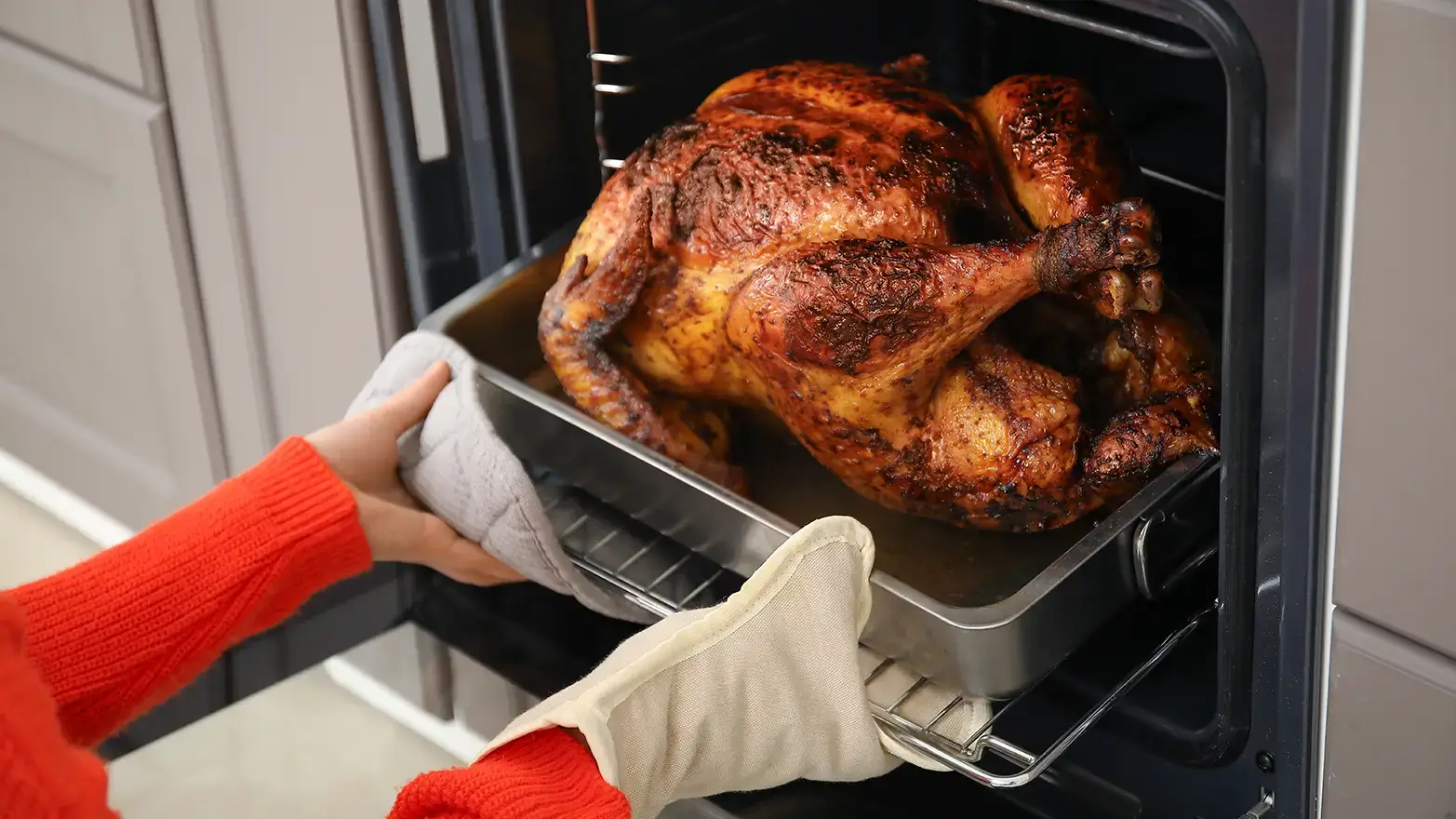
When it comes to cooking a turkey, you need to have the proper supplies on hand. Here are a few turkey cooking supplies you may need to invest in.
Roasting pan and rack: You will need a large roasting pan to cook your turkey. Double-check the capacity of your roasting pan to ensure your turkey will fit comfortably. The roasting rack will help the heat circulate and cook the bird thoroughly.
Meat thermometer: Skip the guesswork and use a meat thermometer to measure the exact temperature of your turkey. A whole turkey is safe when cooked to a minimum internal temperature of 165 °F. Check the internal temperature in the innermost part of the thigh and wing and the thickest part of the breast.
Carving tools: Invest in a quality set of carving tools that includes a fork and knife for ultimate ease. Skip the hassle by cutting your bird with a knife designed for carving.
Baster: Not every recipe requires a baster, but it helps ensure the meat is tender and moist while adding more crispness to the skin. Large spoons are also an alternative to basters.
Cutting board: Invest in a cutting board that has grooves on the edges to catch all the liquid that escapes as you carve. Make sure the cutting board is large enough to cut your bird with ease.
Final turkey cooking thoughts to baste in
There are many factors to consider when cooking a turkey — think about the size, desired cooking method and even your thawing method. With our turkey cooking time calculator, you can estimate how long it will take to make your perfect bird.
Stock up on all your ingredients to prepare the tastiest feast with the help of Instacart. With our holiday meal delivery service, you can focus all your time and effort on making your bird and leave the grocery shopping to our experts. Place your order today for your turkey meal.
Want to brush up on your turkey serving skills this holiday season? Learn how to cut a turkey like a pro!
Turkey cooking time FAQ
Still not sure how long to cook your turkey? This section will answer your most common questions about turkey cooking times, temperatures and methods.
Is it better to cook a turkey at 325° or 350°?
Cooking a turkey at 325°F is ideal for slower, more even cooking, which helps retain moisture. However, cooking at 350°F can result in a slightly crispier skin and faster cooking time. If you’re aiming for a juicier bird, stick with 325°F, but for a more golden, crispy finish, 350°F is a better choice.
How long does it take to cook a turkey per pound?
The general rule for cooking the bird according to turkey roasting time charts is 15 to 20 minutes per pound at 325°F. A cooking time calculator can help you get more precise results, factoring in your turkey’s weight — whether it’s stuffed or unstuffed and whether you’re cooking at a different temperature.
Is it 15 or 20 minutes per pound for turkey?
Both can be correct! If you’re cooking at 325°F, plan for around 15 to 20 minutes per pound, depending on whether your turkey is stuffed or unstuffed. For a stuffed bird, lean toward the higher end of the range, while unstuffed turkeys may cook faster at the lower end.
How long does it take to cook a 14.25-lb turkey?
At 325°F, a 14.25-lb turkey will typically take between 3 hours and 45 minutes to 4 hours and 45 minutes to cook, depending on whether it’s stuffed. Use a meat thermometer to ensure the internal temperature reaches 165°F in the thickest part of the turkey for safety.
Do I cover the turkey with foil or not?
Covering the turkey with foil during the first part of roasting helps keep it moist, but removing it in the final stages allows the skin to crisp up. Adjust based on your preferred texture.

Mel Hull
Author
Mel is a seasoned content strategist and food writer with over a decade of experience helping brands tell compelling stories. Inspired by her hometown of Houston, TX, she brings her love of bold flavors and Southern hospitality to the table. In the kitchen, she loves baking (especially banana bread!) and experimenting with Tex-Mex dishes.

Heather Matley
Editor
Heather Matley is an editor at Instacart whose passion for food and cooking has inspired her work on everything from grocery guides to recipe development. With over eight years of experience in editing, content creation, and search engine optimization, she strives to empower readers with the most effective tools, guides, and ideas to transform their home cooking.

Instacart Recommends
View most recent posts →