Cooking Time Calculator: Prepping, Baking and Meat Temperature Guide

Tired of dry chicken or undercooked roasts? Meat preparation isn’t rocket science, but it does require special care and precision to ensure you aren’t consuming undercooked food. But how long does it take to cook different types of meat? Our simple cooking time calculator gives you the estimated time.
To find out the different cooking durations, all you have to do is input the type of meat, cut of meat and its weight. Eliminate the guesswork with our meat cooking times and tips for cooking meat to perfection.
How do you calculate the cooking time of meat?
Cooking times vary based on the following factors:
Type: Different meats have unique cooking requirements for safety and tenderness.
Cut: Thicker or larger cuts generally require longer cook times, while thinner cuts cook faster.
Weight: Heavier portions take more time to reach the desired internal temperature.
Cooking method: Roasting and braising typically add 10%-30% to the cooking duration, whereas grilling reduces the required time by about 25%.
Temperature: Higher oven or grill temperatures can decrease cooking duration by 20%-25% per 50°F increase, but may affect moisture and texture.
Our calculator uses USDA guidelines and safety standards, which take all these factors into account to provide accurate estimates. We used the resources below and calculated the cooking times based on each type and cut of meat.
You can use our cooking time calculator to estimate how long it will take to make your food. However, using a meat thermometer to measure the internal temperature is also highly recommended.
Essential safety for cooking meat
Cooking meat safely is a simple process anyone can follow.
The most reliable way to ensure your meat is cooked through is by using a meat thermometer. Insert it into the thickest part of the meat, avoiding bones and fat, and check that it reaches the recommended internal temperature. If some areas read lower, return the meat to the oven for at least 10 minutes and recheck.
Another way to check the level of doneness is by piercing the meat with a spoon to inspect the juices. There shouldn’t be any traces of blood, and the liquid should run clear or golden. If your meat’s juices aren’t clear or golden, return the meat to the oven for five or more minutes.
It’s also important to understand the "danger zone" (40°F to 140°F), where bacteria can rapidly grow. To prevent this, keep raw meat out of this temperature range and refrigerate promptly. After cooking, let the meat rest for five to 10 minutes — carryover cooking will raise the internal temperature by 5-10°F, ensuring it’s safe.
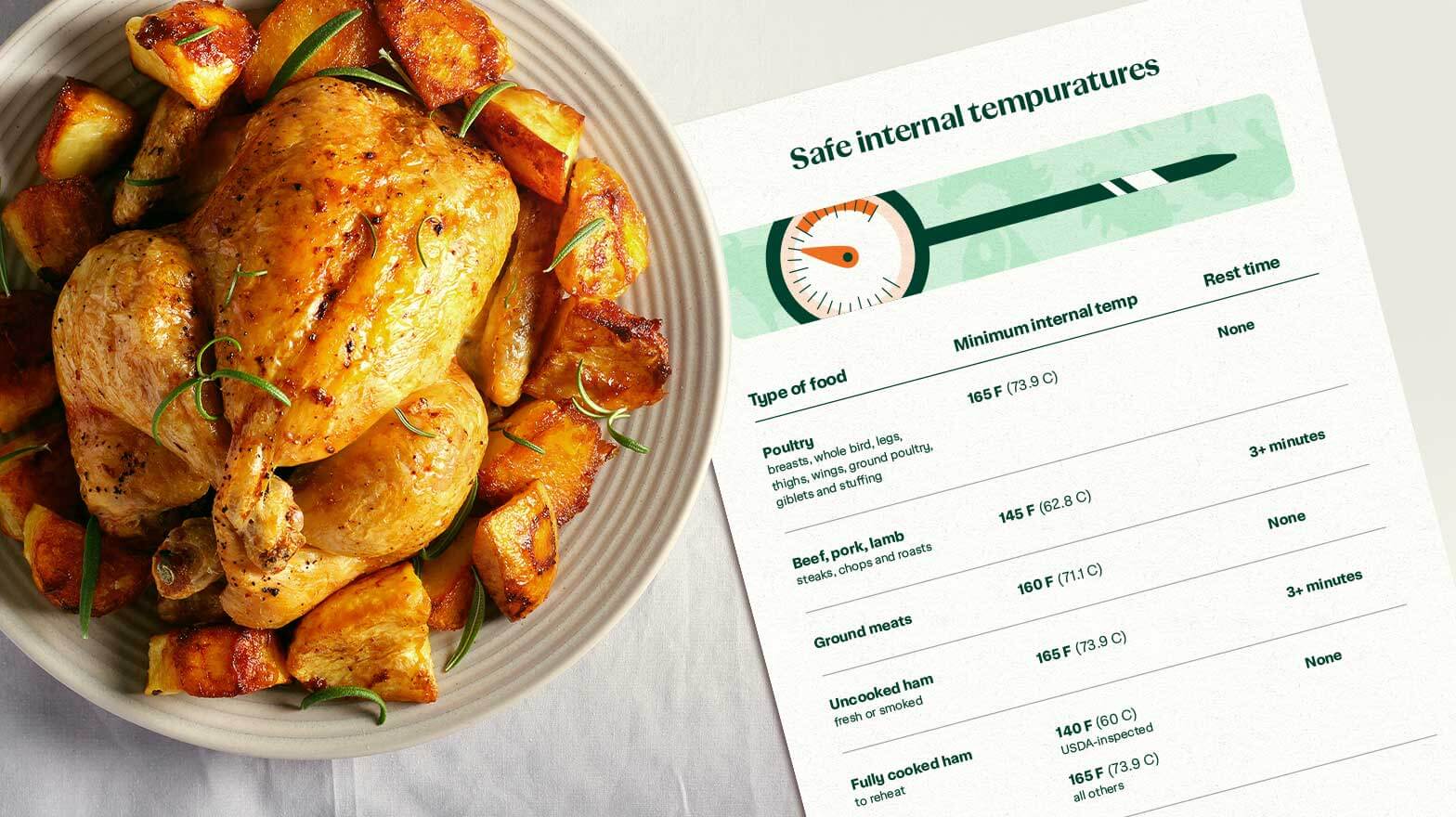
Safe minimum internal temperature chart
It’s one thing to know the different cooking times, but it’s also important to understand the safe minimum internal temperature of each type of meat to reduce the chances of catching a foodborne illness. Check out the internal temperature chart below from the USDA.
Adjusting cooking times for different cooking methods
Cooking times can vary significantly depending on the method used. Whether you're preparing meat for ground turkey recipes or grilling chicken for baked dishes, understanding how to adjust times ensures your meat is cooked to perfection. Here are a few tips to keep in mind.
Oven roasting vs. grilling or smoking
When making a chicken or beef roast in the oven, cooking durations will differ based on temperature and weight. A general rule of thumb is about 20 minutes per pound for poultry at 350°F, while beef roasts typically require 18-22 minutes per pound at the same temperature.
For grilling, cooking times are usually faster, reducing the oven-based time by approximately 25%. That means if a recipe calls for 20 minutes per pound in the oven, you should start checking for doneness around 15 minutes per pound. Smoking, on the other hand, involves low temperatures (225-250°F) and takes 30 to 40 minutes longer per pound for larger cuts like brisket or pork shoulder for pork chop recipes.
Pressure cooker and slow cooker considerations
Pressure cookers cook meat quickly under pressure, often reducing traditional cooking times by up to 50%. Slow cookers, on the other hand, require longer, low-temperature cooking, generally 4 to 8 hours based on the type of food. Use our cooking time calculator to make the necessary adjustments and determine the exact durations to prevent overcooking or undercooking.
Grab it now on Instacart


Tips for cooking meat
Check out these tips for cooking meat to learn how to create the ultimate meal.
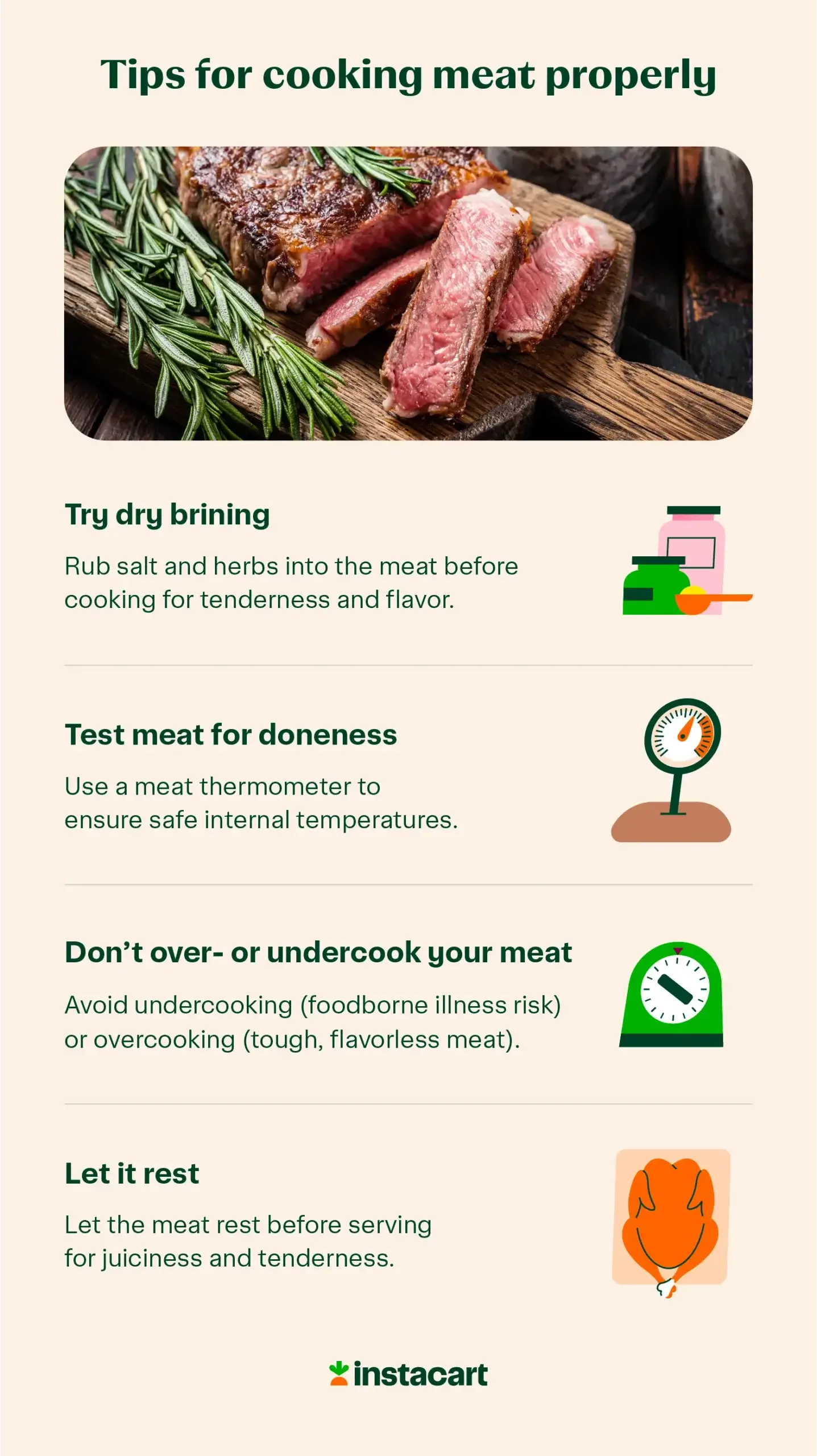
- Try dry brining: Rub salt and herbs into the meat before cooking to tenderize and draw out the juices.
- Test meat for doneness: Use a meat thermometer to check the internal temperature to ensure it’s safe to eat.
- Don’t over- or undercook your meat: Whether you’re grilling steak or preparing minced beef for taco meat recipes, you should always make sure it’s cooked thoroughly. Eating undercooked meat can result in foodborne illnesses, whereas overcooking your meat results in a tough, less flavorful piece.
- Let it rest: Take the meat out of the oven and let it rest as you finish prepping or plating your side dishes to ensure a tender bite every time.
Additional cooking resources
Use one of our additional cooking resource guides alongside our meat cooking chart to reduce your prep time:
Cooking time calculator FAQ
Cooking durations and temperatures can be tricky to master, especially when you’re adjusting recipes or trying new techniques. Get answers to the most common questions about cooking times and temperatures, so you achieve perfectly cooked dishes every time.
How long does it take to cook at 400° instead of 350°?
If you’re increasing the oven temperature from 350°F to 400°F, your cooking time will generally decrease by about 20%-25%. Keep an eye on the dish, and check for doneness early to avoid overcooking. For example, if a recipe calls for one hour at 350°F, you may need to reduce the time to about 45-50 minutes at 400°F.
How do you calculate the cooking time for different temperatures?
To calculate cooking duration when adjusting temperatures, the rule of thumb is to decrease the cooking time by 20%-25% for every 50°F increase in temperature. However, it’s best to monitor the food closely and use a thermometer to ensure proper doneness, especially when dealing with meat.
What is the best way to measure the internal temperature of meat?
The best way to measure meat’s internal temperature is to use a meat thermometer. Insert the thermometer into the thickest part of the meat, avoiding any bones, fat or gristle. For accuracy, wait a few seconds for the temperature to stabilize. Ensure the meat reaches the recommended temperature for safety and doneness, such as 165°F for poultry or 145°F for pork.
How do I know if my meat is overcooked?
Overcooked meat often becomes dry, tough and lacking in flavor. You may notice that the texture is chewy and the meat has lost its juiciness. In the case of poultry, it may also appear stringy or rubbery. Using a meat thermometer to check doneness is the best way to prevent overcooking.
Does all chicken need to be cooked to 165°F?
Yes, according to USDA guidelines, all chicken must reach 165°F for safe consumption. Proper chicken cooking times vary depending on the cut. Using a meat thermometer, however, ensures the meat hits the safe internal temperature for all your chicken breast recipes.
What is the proper doneness for steak and pork chops?
The ideal doneness for steak and pork chops depends on personal preference and safety standards. Follow these guidelines for steak cooking times:
Rare: 125°F, with a cool, red center (rest for 5 minutes)
Medium: 135°F, with a warm pink center (rest for 5 minutes)
Well-done: 160°F, fully cooked with no pink (rest for 5 minutes)
For pork chops, follow these cooking durations:
Rare: 145°F (rest for 3 minutes)
Medium: 150°F (rest for 3 minutes)
Well-done: 160°F (no resting needed)
Master cooking meat with Instacart
Cooking meat is an art form, so let your creative juices flow as you plan your next meal. Use our cooking time calculator to find out how to cook your meat, but don’t forget to test the meat’s doneness with a thermometer to ensure the internal temperature is safe to consume.
For stress-free meal prep, rely on Instacart to deliver all your ingredients right to your door. Focus on perfecting your dish while our delivery experts handle your grocery shopping. Place your order today and enjoy a delicious, hassle-free meal.
Ready to level up your cooking skills? Explore our cooking measurement conversion guide to make ingredient adjustments a breeze!

Mel Hull
Author
Mel is a seasoned content strategist and food writer with over a decade of experience helping brands tell compelling stories. Inspired by her hometown of Houston, TX, she brings her love of bold flavors and Southern hospitality to the table. In the kitchen, she loves baking (especially banana bread!) and experimenting with Tex-Mex dishes.

Heather Matley
Editor
Heather Matley is an editor at Instacart whose passion for food and cooking has inspired her work on everything from grocery guides to recipe development. With over eight years of experience in editing, content creation, and search engine optimization, she strives to empower readers with the most effective tools, guides, and ideas to transform their home cooking.

Instacart Recommends
View most recent posts →