Oil-to-Butter Conversion: Guide to Butter Substitutes

Pausing your recipe to convert ingredients can slow down your cooking process. Maybe your recipe calls for oil and you only have butter, or you’re baking and need a quick substitute for butter. This oil-to-butter conversion guide breaks down how to make the switch without compromising the taste or texture of your recipe.
Below, you’ll find simple ratios, an easy butter conversion chart and practical tips for choosing the right butter substitute so you can keep cooking with confidence.
Table of Contents:
- Oil-to-butter conversion chart
- How to convert oil to butter
- How to convert butter to oil
- Butter substitutes
Oil-to-butter conversion chart
The conversion charts below compare common measurements for oil-to-butter conversion in both U.S. and metric measurements.
Oil to butter (standard metrics)
Use these empirical measurements when converting oil to butter.
Oil | Butter |
¾ teaspoon | 1 teaspoon |
2 ¼ teaspoons | 1 tablespoon |
1 ½ tablespoons | 2 tablespoons |
3 tablespoons | ¼ cup (1/2 stick) |
¼ cup + 2 tablespoons | ½ cup (1 stick) |
½ cup | ⅔ cup |
½ cup + 1 tablespoons | ¾ cup |
¾ cup | 1 cup (2 sticks) |
1 ½ cup | 2 cup (4 sticks) |
Oil to butter (mL)
Not sure how to convert oil to butter using the metric system (mL)? Reference our chart below for common conversions.
Oil | Butter |
75 mL | 100 mL |
150 mL | 200 mL |
225 mL | 300 mL |
300 mL | 400 mL |
375 mL | 500 mL |
450 mL | 600 mL |
525 mL | 700 mL |
600 mL | 800 mL |
675 mL | 900 mL |
750 mL | 1000 mL |
Oil to butter (grams to mL)
Some recipes list , so use the chart below if you need to convert grams to mL.
Oil | Butter |
83 mL | 100 g |
166 mL | 200 g |
249 mL | 300 g |
332 mL | 400 g |
415 mL | 500 g |
498 mL | 600 g |
581 mL | 700 g |
664 mL | 800 g |
747 mL | 900 g |
830 mL | 1000 g |
How to convert oil to butter

You can replace cooking oil with melted butter using a simple 1:1 ratio. If you need a quick substitute for vegetable oil, melted butter works well in most recipes. This swap works with most other oils as well, including olive and canola oil. Just make sure the butter is melted and cooled slightly before adding it to your recipe.
Example: If a recipe calls for 1 cup of oil, use 1 cup of cool or melted butter instead. |
How to convert butter to oil

The charts and information above refer to oil-to-butter conversion, but if you’re wondering if you can substitute butter for oil, the answer is yes. However, it may alter the flavor and moisture level of your recipe. For a quick butter-to-oil conversion, use a 3:4 ratio — for every 1 cup of butter, use ¾ cup of oil.
Example: If a recipe calls for 2/3 cup of butter, use 1/2 cup of oil instead. |
Butter can serve as a reliable substitute for vegetable oil, canola oil, or olive oil. If you’re replacing butter with coconut oil, you can use a 1:1 ratio. Coconut oil is different than other oils because it becomes solid at room temperature and has similar properties to butter.
Grab it now on Instacart


Why oil and butter aren’t the same
Oil and butter behave differently in recipes because they’re not made of the same things. Cooking oils are close to 100% fat, while butter is about 80% fat and contains water and milk solids.
Because of these different compositions, swapping one for the other can change the final flavor and texture of your recipe in a few key ways:
Moisture: Butter adds water, which can create steam and change a baked good’s texture.
Structure: The milk solids in butter can brown or crisp, while oil stays fully liquid.
Flavor: Butter adds a rich, creamy flavor, while most oils are neutral or have a distinctive taste.
Common butter substitutes
No big deal if you run out of butter when cooking — there are plenty of options you can use as a substitute for butter in both sweet and savory dishes. Here are a few common butter substitutes that get the job done.
1. Olive oil
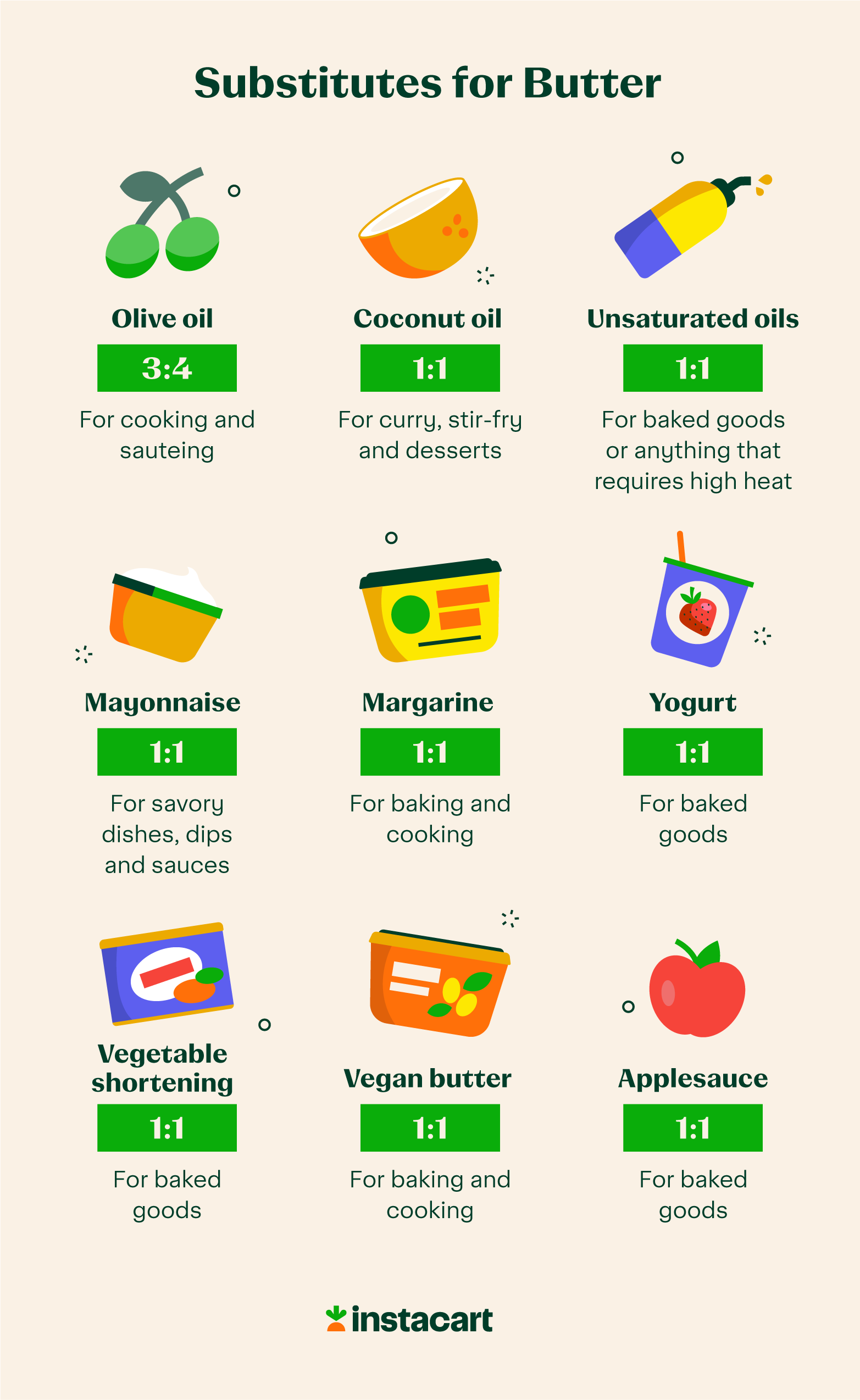
If you’re replacing butter with oil, you can follow a 3:4 ratio. This means you would use ¾ the amount of olive oil in a recipe that calls for butter. Try swapping butter for olive oil in your savory dishes, like this creamy celery soup recipe.
How much to use: 3:4 ratio
Best for: Cooking and sauteing
2. Coconut oil
Coconut oil is a dairy-free, vegan butter substitute. Although coconut oil can replace butter, it has a distinctive flavor that can alter some dishes. Try using coconut oil to replace butter or ghee in this chicken tikka masala recipe, or add it to make a box cake taste better.
How much to use: 1:1 ratio
Best for: Curry, stir-fry and desserts
3. Unsaturated oils
Unsaturated oils like canola, sunflower or vegetable oil can replace butter in most recipes. They work especially well in baked goods such as cupcakes, cookies and banana bread. Vegetable oil is also a great butter substitute for cookies when you want a tender, soft texture. For higher-heat cooking, choosing the best oil for frying can help ensure your recipe cooks evenly and maintains good flavor.
How much to use: 1:1 ratio
Best for: Baked goods or any recipe that requires high heat
4. Mayonnaise
While it may not sound appealing, mayonnaise is a mixture of egg yolks and oil, making an easy butter substitute. You can use mayonnaise for extra moisture in mashed potatoes and other savory dishes. Try melting it down for grilled cheese sandwiches or omelets.
How much to use: 1:1 ratio
Best for: Savory dishes, dips and sauces
5. Margarine
Margarine is one of the most common substitutes for butter because of its similar texture. If you have a dairy allergy or sensitivity, keep in mind that not all margarines are dairy-free. Cook or bake with margarine the same way you use butter.
How much to use: 1:1 ratio
Best for: Baking and cooking
6. Yogurt
Swap butter for full-fat yogurt to maintain the richness and texture. Stick to a 1:1 ratio when using yogurt instead of butter. However, if you’re following a recipe that calls for a large amount of butter, try Greek yogurt instead because of its low moisture content.
How much to use: 1:1 ratio
Best for: Baked goods
7. Vegetable shortening
Use vegetable shortening instead of butter for recipes that don’t need the buttery flavor. Vegetable shortening has a high melting point compared to butter, so your sweet treats will be light and airy.
How much to use: 1:1 ratio
Best for: Baked goods
8. Vegan butter
Most kinds of vegan butter are made from vegetable and nut oils and can replace natural butter. Vegan butter works well as a butter alternative for almost any recipe, especially for baked goods. Stick to the 1:1 ratio to swap for vegan butter in your recipes.
How much to use: 1:1 ratio
Best for: Baking and cooking
9. Applesauce
Transform the lightness of your baked goods by using applesauce instead of butter. Choose unsweetened applesauce because apples are naturally sweet. However, if you only have sweetened applesauce in the house, you can adjust the sugar level in your recipe.
How much to use: 1:1 ratio
Best for: Baked goods
Factors to consider when choosing butter substitutes
When selecting a substitute for butter, you should consider a few factors to ensure your dish turns out just right. Different substitutes can affect flavor and texture in different ways, so understanding what your recipe needs is important.
Here are some important factors to think about when choosing the right butter alternative for your recipe:
- Recipe type: Baking recipes may require different substitutes than those for cooking or spreading.
- Desired flavor: Some substitutes, like olive oil, add a distinct flavor, while others, like vegetable shortening, may have a neutral taste.
- Dietary restrictions: Consider any dietary needs, such as lactose intolerance, vegan preferences or allergies.
- Texture requirements: Different substitutes can impact the texture of your dish, especially in baking, where moisture and fat content are crucial.
- Cooking method: Some substitutes may not perform well at high temperatures — consider how you plan to use the butter alternative.
Additional cooking conversion resources
Use one of our additional cooking conversion resources to streamline your baking and cooking process.
- Cooking measurement conversion
- Cooking time calculator
- Grams to cups converter
- Oven temperature conversion chart
- Serving size calculator
- Grams to mL converter
Master the oil-to-butter conversion
You should now feel more confident in making oil-to-butter conversions. Remember to use the 1:1 ratio to convert oil to butter or the 3:4 ratio for butter to oil.
Cut down even more time by ordering your butter substitutions through Instacart. Add your ingredients to your virtual cart and get your order delivered right to your home.
Oil-to-butter conversion FAQ
Here are answers to common questions about converting between oil and butter in your cooking and baking.
How much oil equals 1 stick of butter?
One stick of butter is equivalent to about 1/2 cup, which translates to approximately 1/3 cup of oil. While butter contains about 80% fat and 20% water, oils are 100% fat. Therefore, you may want to use slightly less oil to account for the moisture content in butter in recipes that require precise measurements.
How much butter do I use instead of 1/2 cup oil?
Use about 2/3 cup of butter to substitute for 1/2 cup of oil. Since butter contains water, using more butter helps replicate the fat content while maintaining the recipe’s moisture balance. This conversion is particularly useful in baking, where moisture is essential for texture.
How do you convert 1/3 cup of oil to butter?
To convert 1/3 cup of oil to butter, you would typically use about 1/2 cup of butter. This adjustment ensures that the recipe retains its intended moisture and richness, as butter’s water content needs to be considered when replacing oil.
How much butter equals 1/4 cup of vegetable oil?
Approximately 3/8 cup of butter, roughly 6 tablespoons, will replace 1/4 cup of vegetable oil. This conversion takes into account the differences in fat and moisture content between oil and butter, helping you maintain the desired consistency in your dish.
Can I substitute oil for butter in cookies?
Yes, you can substitute oil for butter in cookies, but the texture will be different. Oil makes cookies softer and chewier, while butter creates a crisp edge and richer flavor.
Skip the conversion step by using a cookie recipe that already calls for oil instead of butter, like this gluten-free cookie recipe.
How does oil affect the texture of cake compared to butter?
Oil makes cakes feel lighter and more tender because it stays liquid at room temperature. Butter creates a slightly denser crumb and adds more flavor, but it doesn’t retain moisture as well.
What kind of oil is best for replacing butter in baking?
Neutral oils like vegetable, canola or sunflower oil work best when replacing butter in baking because they won’t overpower the flavor of your recipe.
When can’t you substitute oil for butter?
You can’t always swap oil and butter because they behave differently in baking and cooking:
Creaming: Butter must be solid or softened to be “creamed” with sugar, which traps air and helps cakes and some cookies rise. Liquid oil can’t do this. If a recipe starts with creaming, choose a different recipe or consider using an oil and shortening blend.
Flakiness: Cold, solid fat is essential for flaky biscuits, scones and pie crusts. Oil stays liquid and will make the dough dense instead of layered. Use solid coconut oil or vegetable shortening when you need flakiness.
Flavor: Butter adds a rich, distinct flavor that’s essential in recipes like shortbread, butter cookies or frosting. Most oils have a neutral taste, which can leave the final dish bland or slightly oily when substituted.

Mel Hull
Author
Mel is a seasoned content strategist and food writer with over a decade of experience helping brands tell compelling stories. Inspired by her hometown of Houston, TX, she brings her love of bold flavors and Southern hospitality to the table. In the kitchen, she loves baking (especially banana bread!) and experimenting with Tex-Mex dishes.

Heather Matley
Editor
Heather Matley is an editor at Instacart whose passion for food and cooking has inspired her work on everything from grocery guides to recipe development. With over eight years of experience in editing, content creation, and search engine optimization, she strives to empower readers with the most effective tools, guides, and ideas to transform their home cooking.

Instacart Recommends
View most recent posts →